
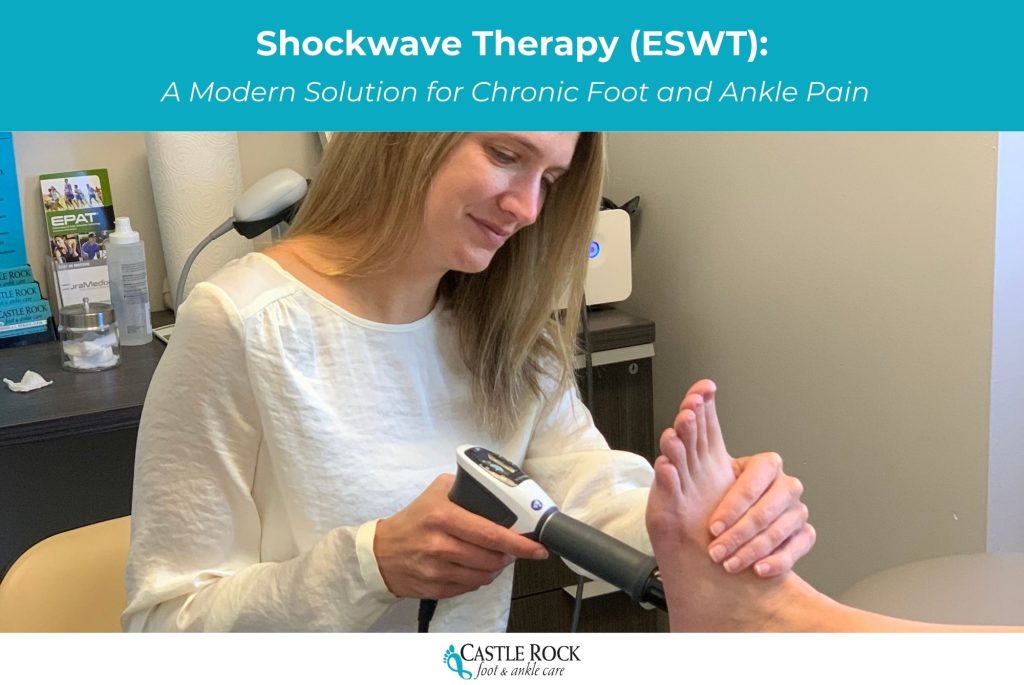
Chronic foot and ankle pain can make even simple daily activities—like walking, exercising, or standing for long periods—feel difficult. For patients who have tried rest, orthotics, or physical therapy without relief, Shockwave Therapy, also known as Extracorporeal Shockwave Therapy (ESWT), may offer a powerful non-surgical treatment option.
At Castle Rock Foot & Ankle Care, patients have access to advanced treatment options like ESWT that target the root cause of pain and stimulate the body’s natural healing processes.
In this article, we’ll explore what shockwave therapy is, how it works, what conditions it treats, and what patients can expect from treatment.
What Is Shockwave Therapy (ESWT)?
Extracorporeal Shockwave Therapy (ESWT) is a non-invasive treatment that uses high-energy acoustic waves to stimulate healing in injured or painful tissues.
The shockwaves are delivered through a handheld device that directs targeted pulses into the affected area. These waves stimulate blood flow, break down scar tissue, and activate the body’s natural healing response.
Unlike surgery, ESWT does not require incisions, anesthesia, or long recovery periods, making it a popular option for patients seeking effective but minimally invasive treatment.
How Shockwave Therapy Works
Shockwave therapy works by sending controlled acoustic waves into the damaged tissue. These waves help:
- Increase circulation and blood flow
- Stimulate cellular repair
- Break up calcifications and scar tissue
- Trigger the body’s natural healing response
- Reduce chronic inflammation
The result is improved tissue regeneration and gradual reduction of pain over time.
Conditions Treated with Shockwave Therapy
Shockwave therapy is often recommended for chronic musculoskeletal conditions, especially when traditional treatments have not provided relief.
At Castle Rock Foot & Ankle Care, ESWT may be used to treat:
Plantar Fasciitis
One of the most common causes of heel pain, plantar fasciitis occurs when the thick ligament on the bottom of the foot becomes inflamed. ESWT can help stimulate healing in the fascia and reduce pain.
Achilles Tendonitis
Shockwave therapy helps improve circulation and repair damaged tendon fibers in patients with chronic Achilles tendon pain.
Heel Spurs
Calcium deposits in the heel can cause significant discomfort. Shockwave therapy helps break down these deposits and relieve pressure.
Posterior Tibial Tendon Dysfunction
This condition affects the tendon that supports the arch of the foot. ESWT may help strengthen and repair damaged tissue.
Chronic Tendon Injuries
Long-standing tendon injuries often involve poor circulation and scar tissue. Shockwave therapy stimulates tissue regeneration and improves healing.
Benefits of Shockwave Therapy
Many patients choose ESWT because it provides a number of advantages compared to more invasive procedures.
Non-Surgical Treatment
Shockwave therapy allows patients to avoid surgery and its associated risks.
Minimal Downtime
Most patients return to normal activities shortly after treatment.
Fast Treatment Sessions
Sessions typically last 15–20 minutes.
Improved Healing
By stimulating the body’s natural repair processes, ESWT promotes long-term recovery rather than temporary symptom relief.
High Success Rates
Many studies report success rates of 70–80% for chronic conditions like plantar fasciitis.
What to Expect During Shockwave Therapy
Understanding the treatment process can help patients feel more comfortable and prepared.
Step 1: Evaluation
A podiatrist will evaluate your condition, symptoms, and medical history to determine whether ESWT is appropriate.
Step 2: Treatment Session
A gel is applied to the skin and a handheld device delivers controlled shockwaves to the affected area.
Step 3: Mild Discomfort
Patients may feel mild tapping or pressure during treatment, but it is generally well tolerated.
Step 4: Multiple Sessions
Most treatment plans involve 3–5 sessions spaced about a week apart.
Recovery After Shockwave Therapy
One of the major benefits of ESWT is the minimal recovery time.
Patients can usually:
- Walk immediately after treatment
- Return to normal activities quickly
- Avoid immobilization or long recovery periods
Some patients may experience mild soreness for a day or two as the healing process begins.
Full results typically develop over several weeks as the tissue repairs itself.
Is Shockwave Therapy Right for You?
Shockwave therapy may be recommended if you:
- Have chronic heel or foot pain
- Have tried conservative treatments without relief
- Want to avoid surgery
- Have conditions such as plantar fasciitis or Achilles tendonitis
A consultation with a podiatrist is the best way to determine if ESWT is the right solution for your specific condition.
Shockwave Therapy (ESWT): Frequently Asked Questions
What does ESWT stand for?
ESWT stands for Extracorporeal Shockwave Therapy, a non-invasive treatment that uses acoustic waves to stimulate healing in damaged tissues.
Is shockwave therapy painful?
Most patients describe the sensation as mild tapping or pulsing. Some temporary discomfort may occur during treatment, but it is usually well tolerated.
How many treatments will I need?
Most patients require 3 to 5 treatment sessions, depending on the severity of their condition.
How long does each session take?
Treatment sessions typically last 15–20 minutes.
Is there downtime after treatment?
There is little to no downtime. Most patients can return to normal activities immediately after treatment.
When will I notice results?
Some patients notice improvement within a few weeks, but the full healing response may take 6–12 weeks.
Is shockwave therapy safe?
Yes. ESWT has been widely studied and is considered safe and effective when performed by a trained medical professional.
Can shockwave therapy replace surgery?
For many patients with chronic foot and ankle conditions, ESWT can reduce or eliminate the need for surgery.
Who should not receive ESWT?
Shockwave therapy may not be recommended for patients who are:
- Pregnant
- Taking certain blood-thinning medications
- Experiencing nerve disorders in the treatment area
A podiatrist will determine whether ESWT is appropriate for you.
Does insurance cover shockwave therapy?
Coverage varies depending on the insurance provider and the condition being treated. Patients should check with their insurance company for details.
Get Expert Foot & Ankle Care in Castle Rock
If chronic foot or ankle pain is affecting your daily life, shockwave therapy may offer a safe, effective, and non-surgical solution.
The experienced team at Castle Rock Foot & Ankle Care provides advanced treatment options designed to help patients regain mobility, reduce pain, and improve overall foot health.
Schedule a consultation today to find out whether Extracorporeal Shockwave Therapy (ESWT) is right for you.
Contact Information
Castle Rock Foot & Ankle Care
2352 Meadows Blvd Suite 270
Castle Rock, CO 80109
Phone: (303) 814-1082
Website:
https://castlerockfootandankle.com
Request An Appointment:
https://castlerockfootandankle.com/new-patients/appointments/