
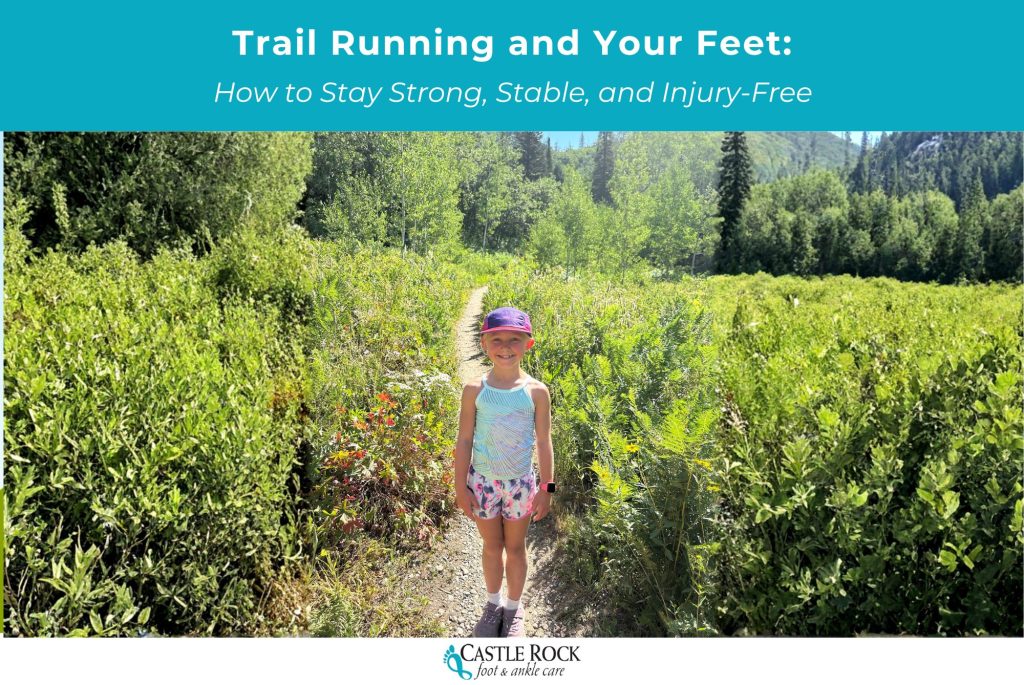
Trail running offers an incredible way to connect with nature while improving cardiovascular health, strength, and endurance. Unlike running on pavement, trails challenge your body with uneven terrain, elevation changes, rocks, roots, and varying surfaces. While these elements make trail running exciting, they also place unique demands on your feet and ankles.
Your feet are the foundation of every stride. Without proper care, trail runners can experience issues such as sprains, plantar fasciitis, stress fractures, blisters, and tendon injuries. Understanding how trail running affects your feet—and how to protect them—can help you stay on the trails longer and avoid painful setbacks.
At Castle Rock Foot & Ankle Care, our experienced podiatry team helps athletes and outdoor enthusiasts prevent and treat foot and ankle conditions so they can stay active and healthy.
Why Trail Running Is Different From Road Running
Trail running engages your feet and ankles in ways that road running does not.
Uneven Surfaces
Trails often include rocks, roots, gravel, and uneven ground. These surfaces require constant micro-adjustments from your feet and ankles to maintain balance.
Increased Ankle Movement
Your ankle stabilizing muscles work harder on trails, increasing the risk of sprains if those muscles are weak or fatigued.
Variable Terrain
Trail runners frequently deal with uphill climbs and downhill descents, both of which place additional strain on the foot and ankle structures.
Greater Impact Variability
Instead of repetitive pavement impact, trail running introduces unpredictable loading forces that can stress tendons, ligaments, and bones.
While these challenges strengthen the body over time, they also increase the risk of injury if runners are not properly prepared.
Common Foot and Ankle Problems in Trail Runners
Ankle Sprains
Trail runners are particularly prone to ankle sprains due to uneven terrain. A simple misstep on a rock or root can cause the ankle to roll inward, stretching or tearing ligaments.
Plantar Fasciitis
The plantar fascia is a thick band of tissue that runs along the bottom of the foot. Overuse, poor footwear, or excessive mileage can cause painful inflammation in this tissue.
Stress Fractures
Repeated impact and overtraining can cause small cracks in the bones of the foot or ankle. Trail runners who increase mileage too quickly are especially at risk.
Achilles Tendinitis
The Achilles tendon connects the calf muscles to the heel bone. Trail running hills places extra strain on this tendon, which can lead to inflammation or degeneration.
Blisters and Skin Irritation
Moisture, friction, and debris inside shoes can lead to painful blisters or skin infections.
Toenail Injuries
Downhill running can push toes against the front of the shoe, leading to bruised or black toenails.
Tips to Protect Your Feet While Trail Running
Wear Proper Trail Running Shoes
Trail running shoes provide:
- Better traction
- Rock protection plates
- Reinforced uppers
- Enhanced stability
Make sure your shoes fit well, have enough toe room, and are designed specifically for trail conditions.
Strengthen Your Ankles
Balance exercises and ankle-strengthening routines can improve stability and reduce injury risk.
Try exercises such as:
- Single-leg balance
- Resistance band ankle exercises
- Calf raises
Gradually Increase Mileage
Avoid sudden increases in running distance or intensity. A good rule is to increase mileage by no more than 10% per week.
Pay Attention to Terrain
Slow down when navigating technical terrain. Focus on foot placement and avoid distractions.
Keep Your Feet Dry
Moisture increases friction and blister risk. Moisture-wicking socks and proper shoe ventilation can help keep feet comfortable.
Stretch After Running
Stretching the calves, Achilles tendon, and plantar fascia can reduce tightness and prevent injury.
When to See a Foot and Ankle Specialist
Many runners try to push through pain, but persistent foot or ankle discomfort is a sign that something may be wrong.
You should see a podiatrist if you experience:
- Pain that lasts more than a few days
- Swelling in the foot or ankle
- Difficulty bearing weight
- Recurring ankle sprains
- Heel pain in the morning
- Numbness or tingling in the foot
Early diagnosis and treatment can prevent minor issues from becoming long-term injuries.
At Castle Rock Foot & Ankle Care, our specialists provide advanced care for sports-related foot and ankle conditions, helping runners return safely to the activities they love.
How a Podiatrist Can Help Trail Runners
A podiatrist can provide personalized treatment and preventive care tailored to runners.
Services may include:
- Custom orthotics to improve foot alignment
- Gait analysis to identify biomechanical issues
- Injury diagnosis using advanced imaging
- Treatment plans for tendon, ligament, and bone injuries
- Preventive strategies to reduce recurring injuries
Whether you’re a beginner or an experienced trail runner, professional guidance can significantly improve performance and reduce injury risk.
Q&A: Trail Running and Foot Health
Is trail running better for your feet than road running?
Trail running can reduce repetitive impact compared to pavement, but uneven terrain increases the risk of ankle sprains and instability injuries. Proper footwear and conditioning are essential.
What type of shoes should I wear for trail running?
Trail-specific running shoes with strong traction, stability features, and protective soles are recommended. They help prevent slips and protect your feet from rocks and debris.
Why do my feet hurt after trail running?
Foot pain can result from overuse, improper footwear, poor running mechanics, or conditions like plantar fasciitis or stress fractures.
How can I prevent ankle sprains on trails?
Strengthening ankle muscles, wearing supportive shoes, slowing down on technical terrain, and improving balance can significantly reduce sprain risk.
Are blisters common for trail runners?
Yes. Blisters often occur due to friction, moisture, or debris inside the shoe. Wearing moisture-wicking socks and ensuring proper shoe fit can help prevent them.
Should I run through foot pain?
No. Pain is your body’s warning sign. Continuing to run with pain can worsen injuries and prolong recovery time.
How do I know if I have plantar fasciitis?
Common symptoms include sharp heel pain, especially in the morning or after periods of rest. A podiatrist can confirm the diagnosis and recommend treatment.
Do custom orthotics help runners?
Yes. Custom orthotics can correct biomechanical issues, improve alignment, and reduce stress on the feet and ankles during running.
How often should I replace trail running shoes?
Most trail running shoes should be replaced every 300–500 miles, depending on terrain and wear.
When should I see a podiatrist for a running injury?
If pain persists for more than a few days, worsens with activity, or affects your ability to walk or run, it’s time to seek professional care.
Stay Healthy on the Trails
Trail running is an incredible way to build endurance, explore nature, and challenge your body. However, protecting your feet and ankles is essential to enjoying the sport safely.
By wearing proper footwear, strengthening your ankles, and addressing pain early, you can reduce the risk of injury and continue exploring the trails with confidence.
If you’re experiencing foot or ankle discomfort related to running or other activities, the team at Castle Rock Foot & Ankle Care is here to help.
Contact Information
Castle Rock Foot & Ankle Care
2352 Meadows Blvd Suite 270
Castle Rock, CO 80109
Phone: (303) 814-1082
Website:
castlerockfootandankle.com
Request An Appointment:
https://castlerockfootandankle.com/new-patients/appointments/