
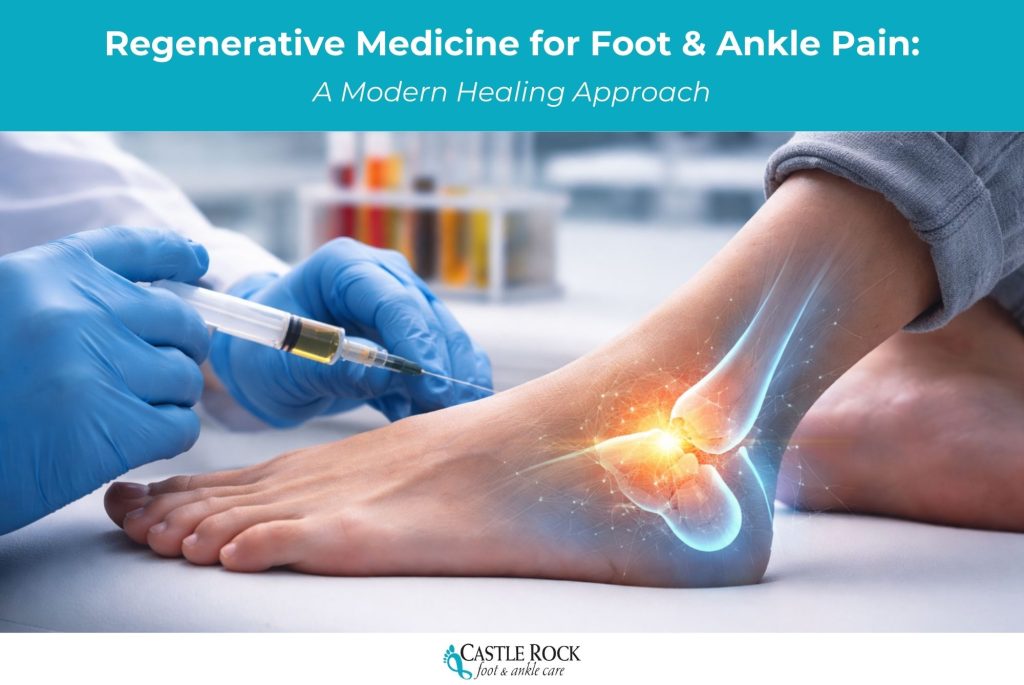
Foot and ankle pain can make even the simplest activities—walking, exercising, or standing at work—difficult. Traditional treatments often focus on managing symptoms, but modern medical advances are now offering patients new ways to support the body’s natural healing processes. One of the most exciting developments in podiatry is regenerative medicine, a treatment approach designed to repair damaged tissues and promote long-term recovery.
At Castle Rock Foot & Ankle Care, patients have access to advanced regenerative therapies that help address chronic pain, sports injuries, tendon damage, and joint problems without relying solely on surgery or long-term medications.
In this guide, we’ll explore what regenerative medicine is, how it works, and how it can benefit people dealing with foot and ankle conditions.
What Is Regenerative Medicine?
Regenerative medicine is a medical approach that stimulates the body’s natural healing mechanisms to repair damaged tissues, reduce inflammation, and restore function. Instead of simply masking symptoms, regenerative therapies aim to encourage tissue regeneration and repair at the cellular level.
These treatments are often used for:
- Chronic tendon injuries
- Ligament damage
- Joint degeneration
- Plantar fasciitis
- Arthritis
- Sports injuries
- Slow-healing foot or ankle conditions
For many patients, regenerative medicine offers a minimally invasive alternative to surgery while helping reduce pain and accelerate healing.
How Regenerative Medicine Helps Foot & Ankle Conditions
The foot and ankle contain numerous small joints, tendons, ligaments, and bones, making them especially prone to injury and degeneration. When these structures become damaged, healing can sometimes be slow due to limited blood supply.
Regenerative medicine helps by:
- Stimulating cellular repair
- Increasing blood flow to injured tissues
- Reducing inflammation
- Supporting collagen and tissue regeneration
- Enhancing the body’s natural healing response
These therapies are commonly used to treat conditions that may otherwise require surgery or prolonged recovery times.
Conditions That May Benefit From Regenerative Medicine
Patients experiencing chronic or recurring foot and ankle pain may benefit from regenerative therapies. Common conditions treated include:
Plantar Fasciitis
Plantar fasciitis is one of the most common causes of heel pain. Regenerative treatments may help repair the damaged fascia tissue and reduce inflammation.
Achilles Tendonitis
Overuse injuries to the Achilles tendon can be slow to heal. Regenerative medicine can help stimulate tendon repair and improve strength.
Arthritis in the Foot and Ankle
Joint degeneration can cause stiffness, swelling, and pain. Regenerative therapies may help reduce inflammation and support joint health.
Ligament Sprains
Severe ankle sprains can leave ligaments weakened or unstable. Regenerative treatments may encourage stronger tissue repair.
Sports Injuries
Athletes frequently experience tendon, ligament, or cartilage injuries that benefit from treatments designed to promote healing and restore mobility.
Benefits of Regenerative Medicine
Patients choose regenerative medicine because it offers several potential advantages:
- Minimally invasive treatment options
- Reduced recovery time compared to surgery
- Natural healing support
- Less reliance on pain medications
- Long-lasting improvements in function and mobility
While results can vary depending on the individual condition, many patients experience reduced pain and improved movement following treatment.
Personalized Treatment at Castle Rock Foot & Ankle Care
Every foot and ankle condition is unique, which is why regenerative medicine treatments are carefully tailored to each patient’s needs.
At Castle Rock Foot & Ankle Care, the medical team begins with a thorough evaluation that may include:
- Physical examination
- Imaging studies
- Review of symptoms and medical history
- Assessment of activity levels and lifestyle factors
From there, a personalized treatment plan is developed to support healing and restore function.
Regenerative Medicine Q&A
What exactly does regenerative medicine do?
Regenerative medicine works by stimulating the body’s natural healing processes to repair damaged tissues. This may involve therapies designed to enhance cellular activity, reduce inflammation, and promote tissue regeneration.
Is regenerative medicine safe?
When performed by experienced medical professionals, regenerative therapies are generally considered safe. Your doctor will evaluate your health and condition to determine if the treatment is appropriate for you.
Who is a good candidate for regenerative medicine?
Patients with chronic foot or ankle pain, tendon injuries, ligament damage, arthritis, or sports-related injuries may benefit from regenerative treatments. A consultation is necessary to determine candidacy.
Can regenerative medicine replace surgery?
In some cases, regenerative medicine can help patients avoid surgery by improving tissue healing and reducing pain. However, severe injuries or structural damage may still require surgical treatment.
How long does recovery take?
Recovery times vary depending on the condition being treated. Many patients are able to return to normal activities sooner than they would after traditional surgical procedures.
Are regenerative treatments painful?
Most regenerative procedures are minimally invasive and involve little discomfort. Patients may experience mild soreness following treatment, but this typically resolves quickly.
How soon will I see results?
Some patients begin to notice improvements within a few weeks, while others may see gradual progress over several months as tissues heal.
Are regenerative treatments covered by insurance?
Coverage varies depending on the specific treatment and insurance provider. The staff at Castle Rock Foot & Ankle Care can help discuss payment options and insurance questions.
Do athletes benefit from regenerative medicine?
Yes. Many athletes choose regenerative therapies to accelerate recovery, repair injuries, and improve mobility while avoiding prolonged downtime.
When to See a Foot & Ankle Specialist
If you are experiencing persistent foot or ankle pain, limited mobility, swelling, or recurring injuries, it may be time to consult a podiatry specialist. Early treatment can help prevent conditions from worsening and allow you to return to an active lifestyle sooner.
The experienced team at Castle Rock Foot & Ankle Care is dedicated to helping patients find effective solutions for foot and ankle problems using advanced treatment techniques, including regenerative medicine.
Contact Castle Rock Foot & Ankle Care
Castle Rock Foot & Ankle Care
2352 Meadows Blvd Suite 270
Castle Rock, CO 80109
📞 Phone: (303) 814-1082
🌐 Website:
https://castlerockfootandankle.com
📅 Request An Appointment:
https://castlerockfootandankle.com/new-patients/appointments/