
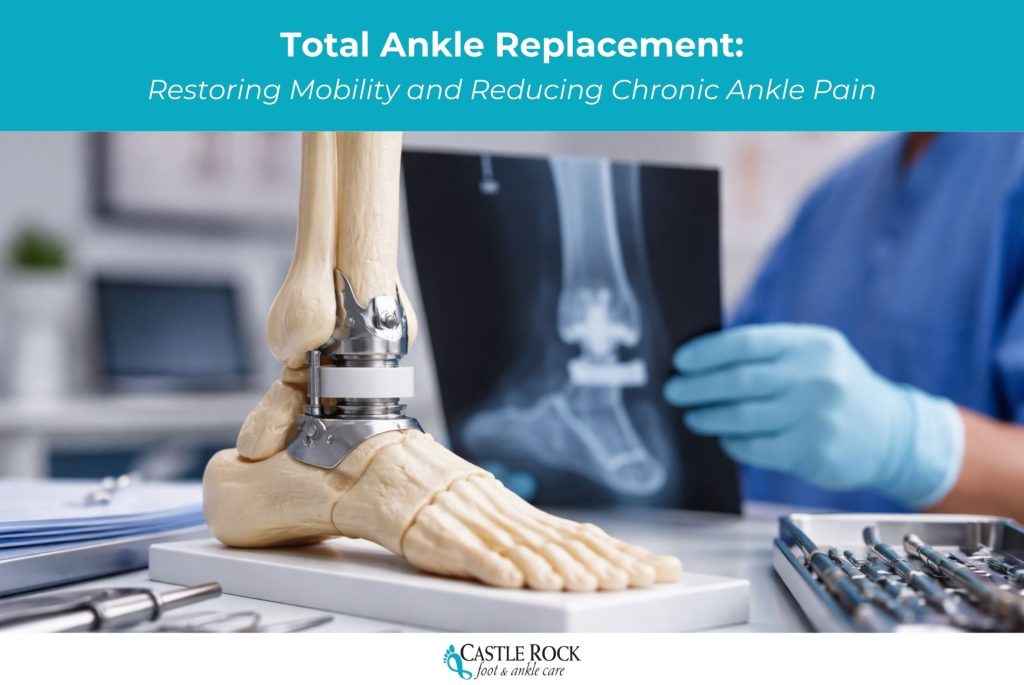
Chronic ankle pain can make even the simplest daily activities—walking, climbing stairs, or standing for long periods—feel challenging. For individuals suffering from severe ankle arthritis or joint damage, total ankle replacement surgery may offer a long-term solution that relieves pain while preserving natural movement.
At Castle Rock Foot & Ankle Care, patients receive advanced treatment options designed to restore comfort, stability, and mobility. Total ankle replacement is one of the most effective surgical procedures available today for people whose ankle joints have been significantly damaged by arthritis, injury, or degeneration.
In this guide, we’ll explore what total ankle replacement is, who may benefit from the procedure, what to expect during recovery, and answer frequently asked questions about the surgery.
What Is Total Ankle Replacement?
Total ankle replacement (ankle arthroplasty) is a surgical procedure in which a damaged ankle joint is replaced with an artificial joint made of metal and plastic components. These components mimic the natural structure and movement of the ankle, allowing patients to regain mobility and significantly reduce pain.
The ankle joint is formed where the tibia (shin bone), fibula, and talus meet. Over time, conditions like osteoarthritis, rheumatoid arthritis, or traumatic injuries can cause the cartilage within this joint to wear away. When this happens, bones rub against each other, leading to pain, stiffness, and limited movement.
During ankle replacement surgery, the damaged surfaces of the joint are removed and replaced with prosthetic components that create a smoother, more functional joint.
Conditions That May Lead to Ankle Replacement
Total ankle replacement is typically recommended when conservative treatments no longer provide relief. Some of the most common causes of severe ankle joint damage include:
- Osteoarthritis (wear-and-tear arthritis)
- Rheumatoid arthritis
- Post-traumatic arthritis from past ankle injuries
- Severe ankle fractures
- Chronic ankle instability
- Joint deformities
- Advanced cartilage damage
When these conditions progress to the point where walking becomes painful or mobility is severely limited, ankle replacement may be an appropriate solution.
Benefits of Total Ankle Replacement
Total ankle replacement offers several advantages compared to other surgical options such as ankle fusion.
Pain Relief
The primary goal of ankle replacement surgery is to eliminate chronic joint pain caused by arthritis or severe joint damage.
Improved Range of Motion
Unlike ankle fusion—which permanently locks the joint—ankle replacement preserves motion, allowing patients to move their ankle more naturally.
Better Walking Mechanics
Maintaining ankle mobility helps improve overall gait and reduces stress on neighboring joints like the knees, hips, and feet.
Increased Quality of Life
Many patients experience a significant improvement in daily activities such as walking, exercising, and standing comfortably.
What to Expect During the Procedure
Total ankle replacement is typically performed under general or regional anesthesia and usually takes about two to three hours.
The surgical process generally involves:
- Making an incision over the ankle joint
- Removing damaged bone and cartilage
- Preparing the joint surfaces
- Placing the artificial joint components
- Testing alignment and mobility
- Closing the incision
After surgery, the ankle is usually placed in a splint or cast to allow proper healing.
Recovery After Total Ankle Replacement
Recovery is a gradual process that involves several phases.
Initial Recovery
Patients typically keep weight off the ankle for several weeks while the joint heals.
Physical Therapy
Rehabilitation plays a key role in restoring strength, flexibility, and balance.
Gradual Return to Activity
Over the following months, patients gradually resume normal activities with guidance from their podiatrist.
Most individuals begin to see major improvements within three to six months, although full recovery can take up to a year.
Who Is a Good Candidate for Total Ankle Replacement?
Total ankle replacement may be recommended for patients who:
- Have severe ankle arthritis
- Experience chronic ankle pain that limits daily activity
- Have not responded to non-surgical treatments
- Maintain good bone quality and joint alignment
- Want to preserve ankle movement rather than fuse the joint
However, patients with certain conditions—such as severe deformities, active infections, or poor circulation—may require alternative treatments.
A consultation with an experienced podiatrist is the best way to determine whether ankle replacement is the right option.
Total Ankle Replacement: Frequently Asked Questions
What is the difference between ankle replacement and ankle fusion?
Ankle fusion permanently joins the bones of the ankle joint together to eliminate movement and reduce pain. While effective, it can limit mobility and place additional stress on nearby joints.
Total ankle replacement preserves joint movement by replacing the damaged joint with artificial components, allowing for more natural motion.
How long does a total ankle replacement last?
Modern ankle implants can last 10–20 years or longer, depending on factors such as activity level, weight, and overall health.
Regular follow-up visits help ensure the implant continues functioning properly.
Is total ankle replacement painful?
Most patients experience significant pain relief after surgery. Some discomfort during the recovery period is normal, but it is typically manageable with medication and improves as healing progresses.
How long will I need to stay off my foot?
Patients are generally advised to avoid putting weight on the ankle for several weeks after surgery. Your doctor will provide specific guidance based on your individual recovery.
Will I need physical therapy?
Yes. Physical therapy is an essential part of recovery. It helps restore ankle mobility, strengthen surrounding muscles, and improve balance and walking mechanics.
Can I return to normal activities after ankle replacement?
Many patients are able to return to low-impact activities such as walking, cycling, swimming, and golfing once they have fully recovered. High-impact activities may be discouraged to protect the implant.
Are there risks associated with ankle replacement surgery?
Like all surgical procedures, ankle replacement carries some risks, including:
- Infection
- Blood clots
- Implant wear or loosening
- Nerve injury
- Delayed healing
Working with an experienced foot and ankle specialist helps minimize these risks.
When should I see a foot and ankle specialist?
You should consider seeing a specialist if you experience:
- Persistent ankle pain
- Swelling that does not improve
- Limited ankle movement
- Difficulty walking or standing
- Pain that interferes with daily activities
Early evaluation can help determine the best treatment options.
Expert Ankle Care in Castle Rock, CO
If chronic ankle pain is interfering with your daily life, professional care can help restore your comfort and mobility. The team at Castle Rock Foot & Ankle Care provides comprehensive treatment options—including advanced surgical procedures like total ankle replacement—to help patients return to the activities they love.
Whether you are exploring treatment options for ankle arthritis or seeking a second opinion, expert guidance is available to help you make informed decisions about your foot and ankle health.
Contact Castle Rock Foot & Ankle Care
Castle Rock Foot & Ankle Care
2352 Meadows Blvd Suite 270
Castle Rock, CO 80109
Phone: (303) 814-1082
Website:
https://castlerockfootandankle.com
Request An Appointment:
https://castlerockfootandankle.com/new-patients/appointments/